Monthly Night Sky Guide
November Night Sky Guide 2026 Southern Europe
What to see and photograph this November from Spain and Southern Europe, including the best dark-sky nights, meteor showers, deep-sky targets and practical observing highlights.
Plan the monthNovember 2026
November at a Glance
The useful dates and seasonal shifts to know before planning an observing or imaging night.
Southern Spain · 37.7°N
November Sky Planner
Approximate timings from Southern Spain · 37.7°N · November 2026
Dusk – around 10pm
Early Evening
- Andromeda Galaxy — M31
- Triangulum Galaxy — M33
- Double Cluster — NGC 869 & NGC 884
Around 10pm – midnight
Mid-Evening
- Pleiades — M45
- California Nebula — NGC 1499
- Heart & Soul Nebulae
After midnight
Late Night
- Orion Nebula — M42
- Horsehead + Flame Nebulae
- Rosette Nebula — NGC 2237
Around the New Moon
Dark-Sky Window
5–13 November
Darkest around the New Moon on 9 November. Moon-free hours vary through the window.
Photographer’s tipStart with Andromeda, Perseus or Cassiopeia, then move into Taurus and Orion as the winter sky climbs later in the night.
Featured targets
5 November Targets to See or Photograph
Five useful November targets spanning reflection and emission nebulae, a supernova remnant and one of the sky’s best-known star clusters, with detailed notes further down the guide.
01 · Open Star Cluster
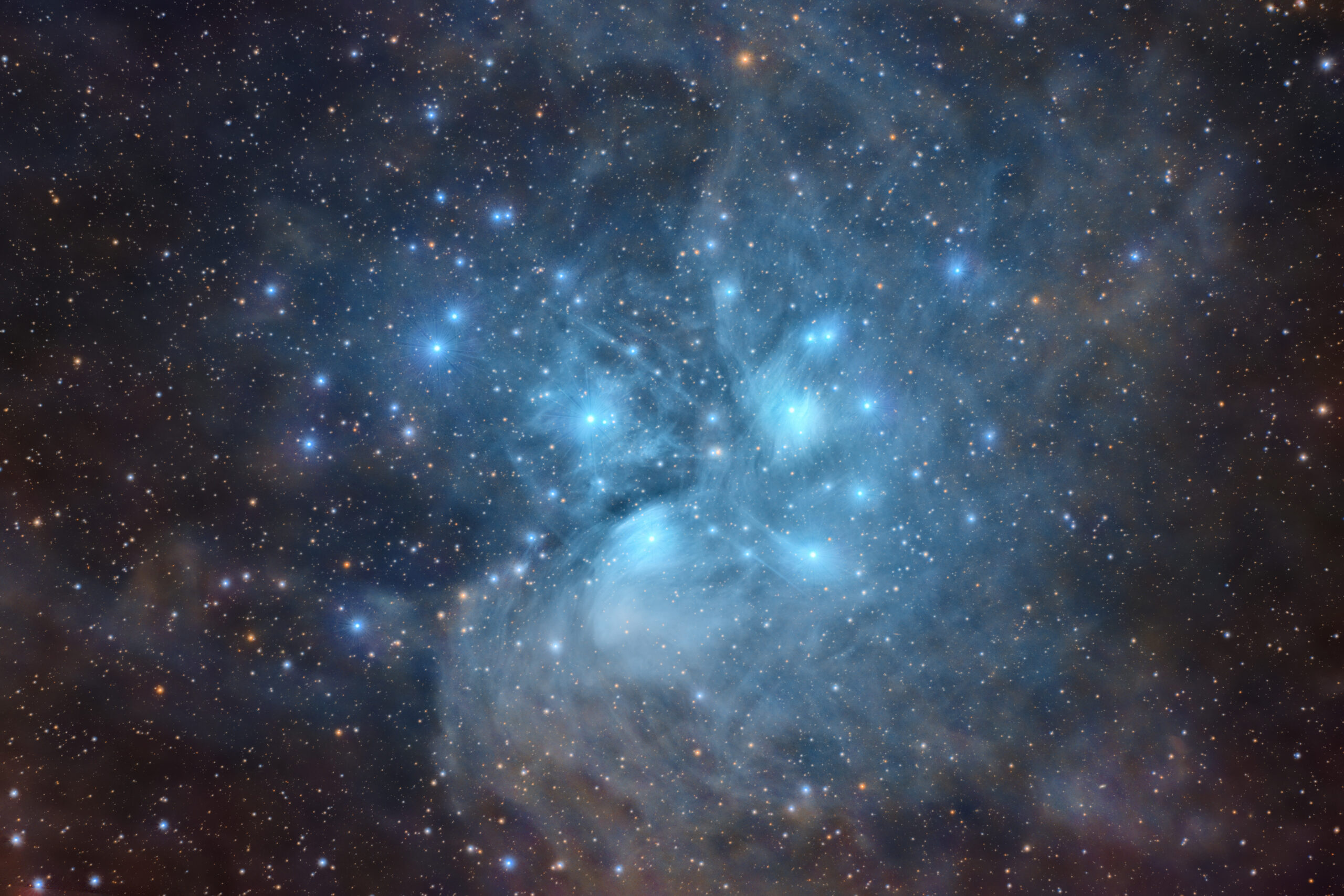
Pleiades — M45
The Pleiades are one of November’s defining evening sights. The bright blue stars are easy to capture, while dark, transparent skies help reveal the surrounding reflection nebulosity and faint dust.
Best time: Mid-evening onward.
Detailed imaging notes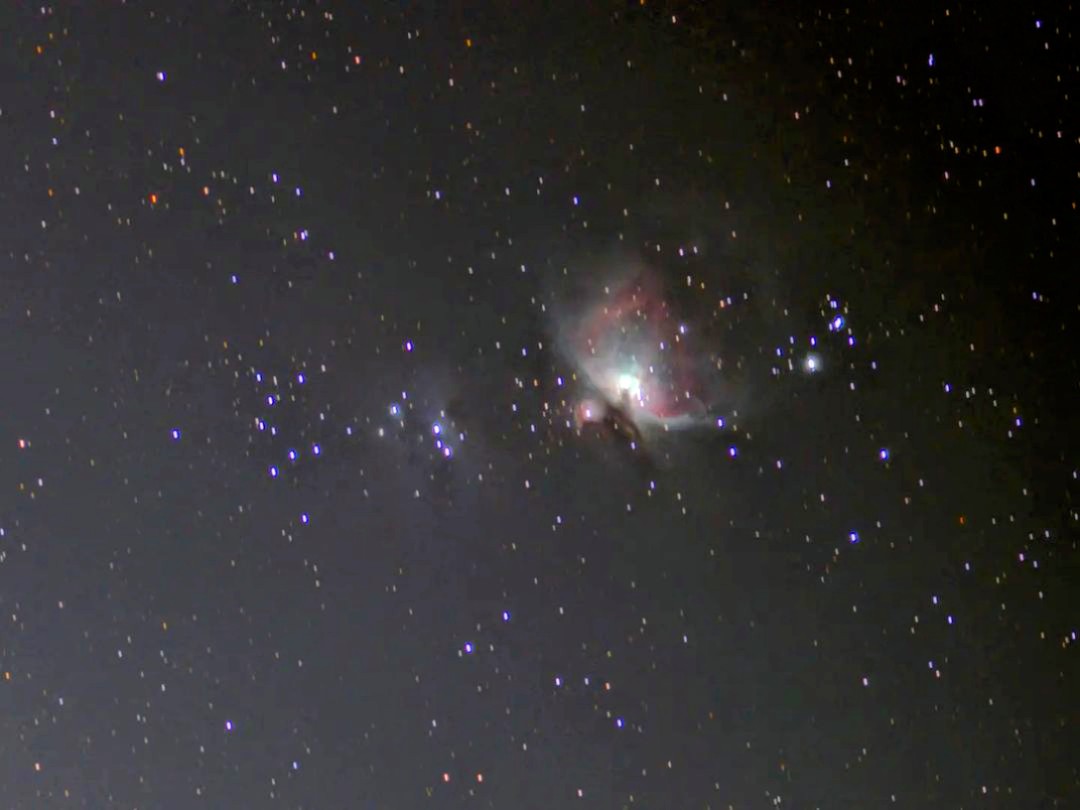
02 · Emission Nebula
Orion Nebula — M42
M42 returns as a major late-evening November target. It is bright enough for visual observing and short exposures, while longer integrations reveal the outer wings, dust and surrounding Orion complex.
Best time: Late evening into the early hours.
Detailed imaging notes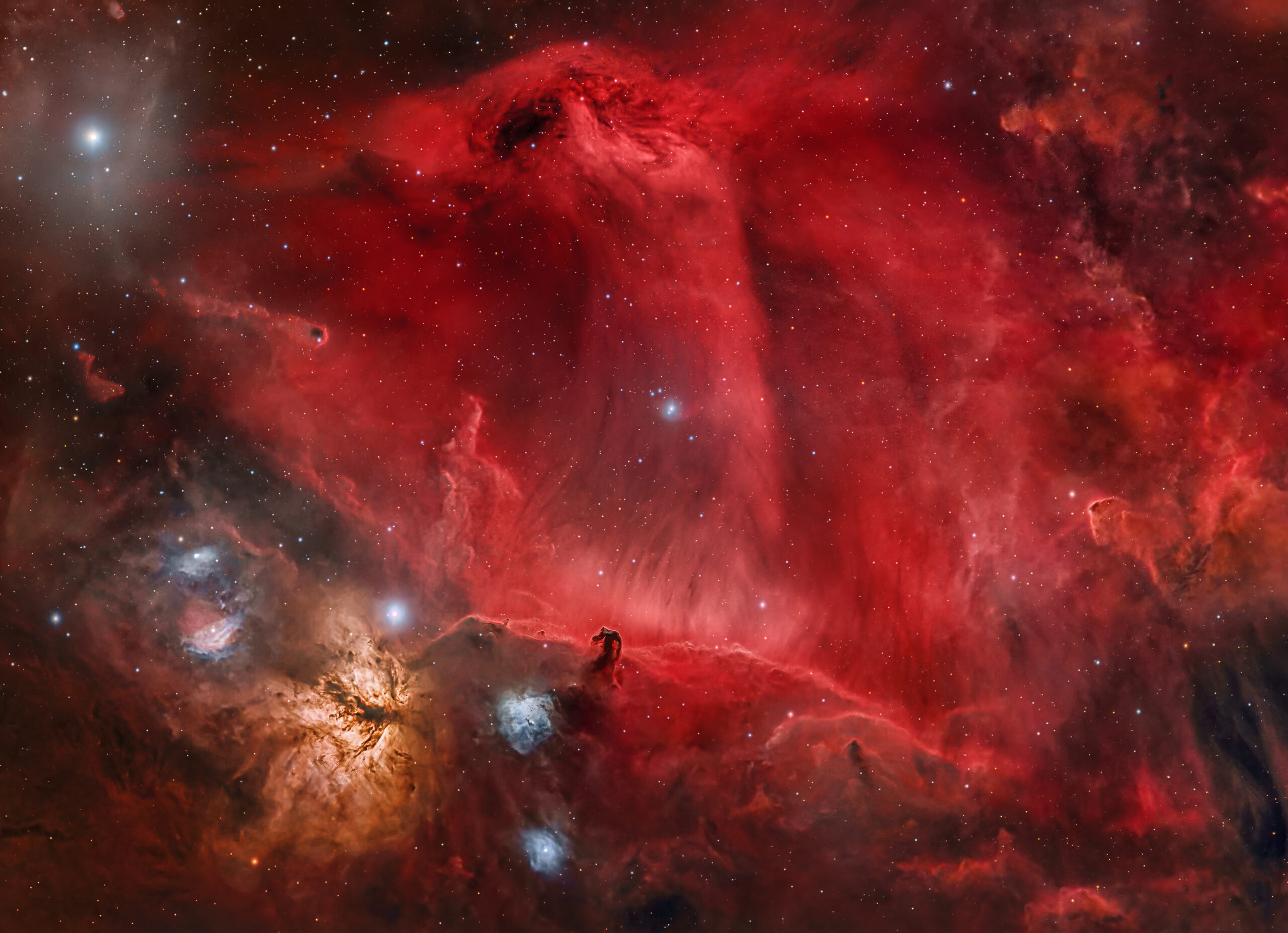
03 · Dark + Emission Nebulae
Horsehead + Flame — B33 / NGC 2024
The Horsehead and Flame sit beside Alnitak in Orion’s Belt and become increasingly practical during November. The field combines dark dust, hydrogen emission and a very bright star, making it both rewarding and technically demanding.
Best time: Late evening onward.
Detailed imaging notes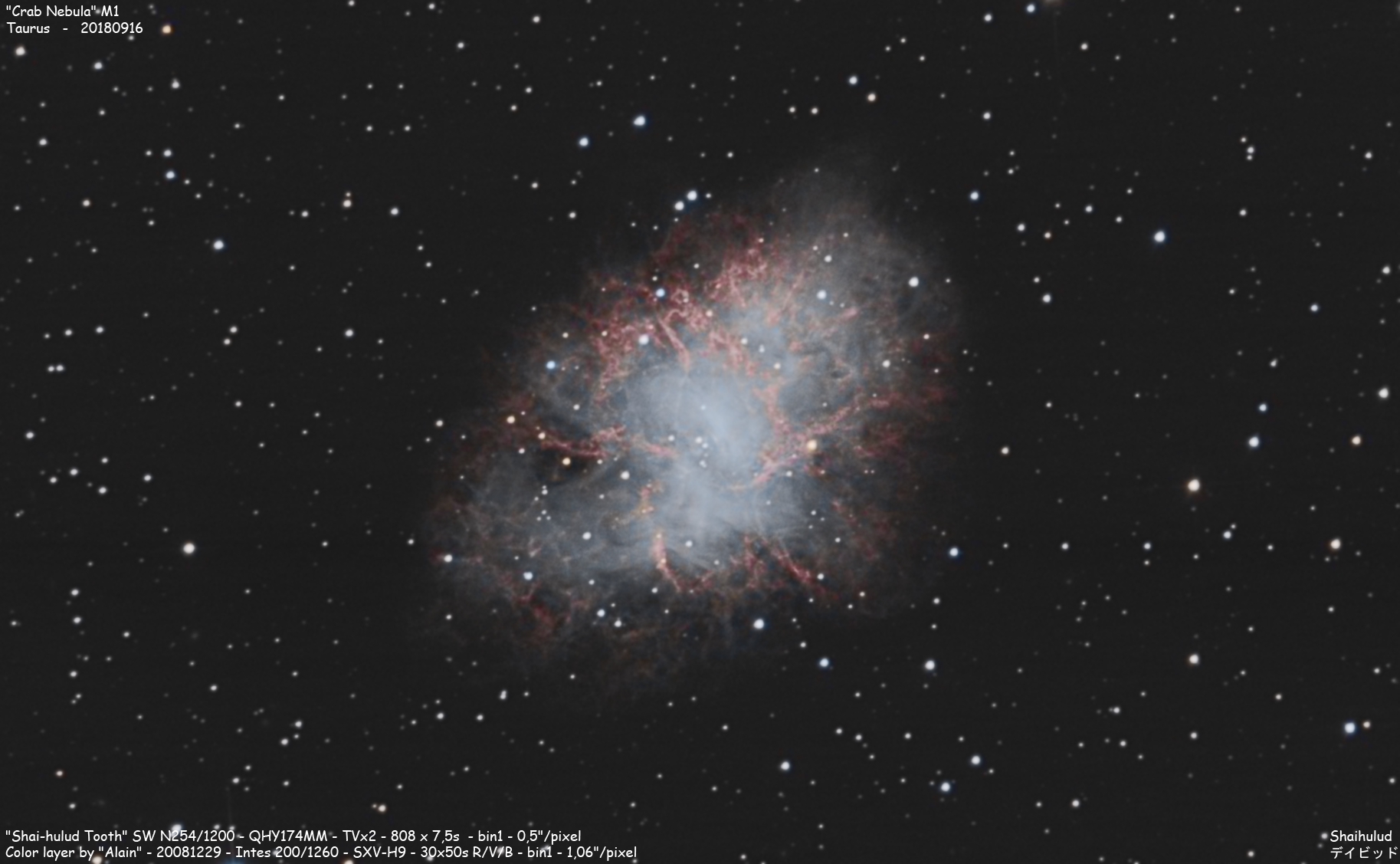
04 · Supernova Remnant
Crab Nebula — M1
The Crab Nebula is the compact remnant of the supernova recorded in 1054. November brings Taurus into a stronger position through the evening, making M1 a useful target for longer focal lengths and good seeing.
Best time: Mid- to late evening onward.
Detailed imaging notes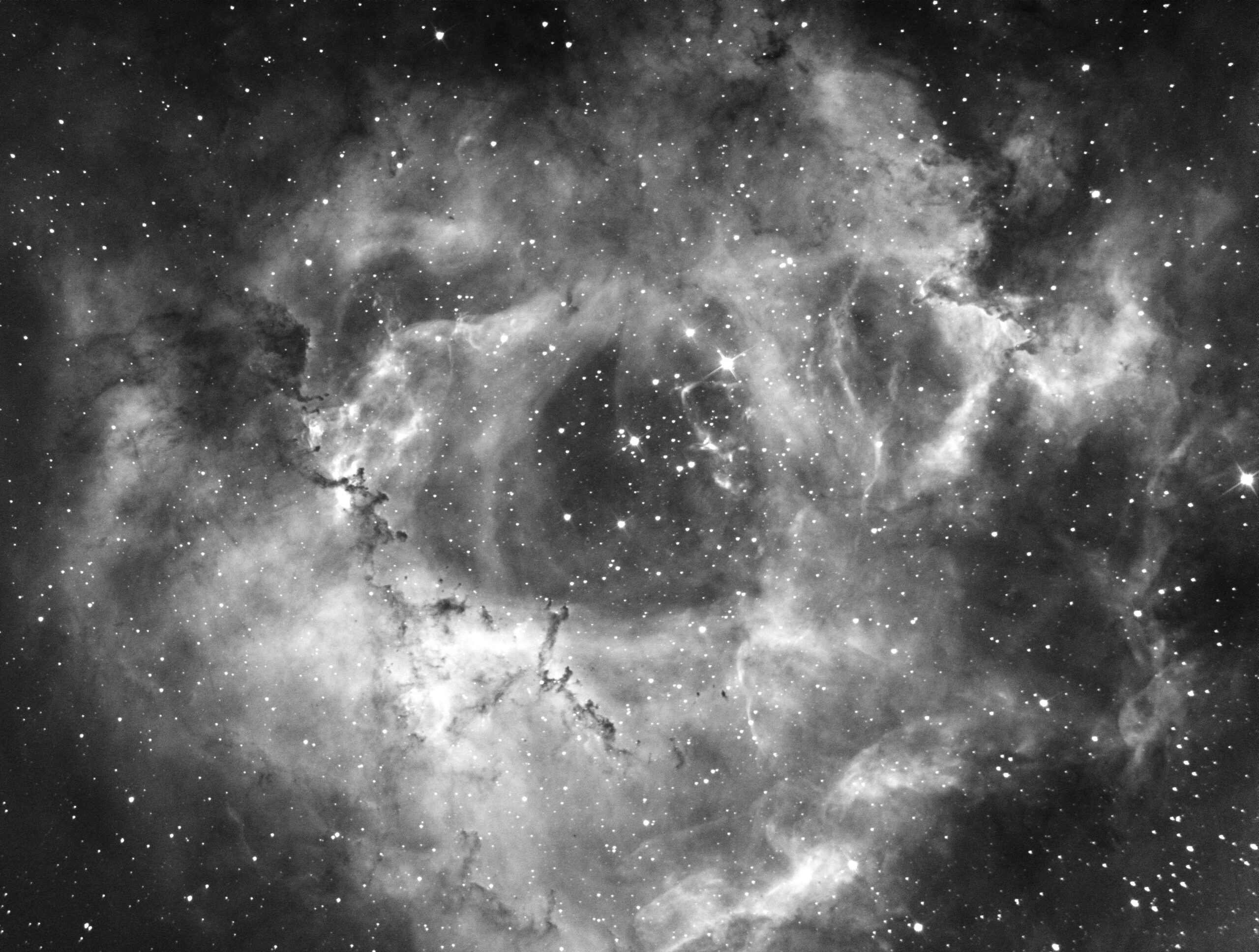
05 · Emission Nebula
Rosette Nebula — NGC 2237 / NGC 2244
The Rosette is a large emission complex in Monoceros surrounding the bright cluster NGC 2244. It becomes a strong second-half-of-the-night November target and suits wide-field narrowband or dual-band imaging.
Best time: After midnight, improving later in the month.
Detailed imaging notesAcross the month
Other November Highlights
Taurid Meteor Showers
The Southern and Northern Taurids have broad, modest peaks but can produce slow, bright meteors. Dark conditions around New Moon favour the early-November overlap.
Mars Meets Jupiter
Mars and Jupiter pass close together before dawn, visible as a striking naked-eye pairing and an easy binocular target.
Leonid Meteor Shower
The Leonids peak overnight. The first-quarter Moon sets around midnight before the maximum, improving conditions for the later part of the night.
Uranus at Opposition
Uranus reaches opposition and is at its best observing position of the year, although binoculars or a telescope are needed to pick it out clearly.
Technical planning
Detailed November Imaging Guide
November shifts the practical emphasis toward Taurus and Orion from Southern Spain. Autumn galaxies remain strong early in the night, while Pleiades, Orion and Monoceros increasingly dominate the later hours.
Focal-length suggestions are approximate and depend on sensor size and framing. Filter recommendations are practical starting points rather than fixed rules; Leonard’s Lookout’s dark skies also make broadband imaging particularly useful when the Moon is absent.
01 · Open Star Cluster
Pleiades — M45
Why November matters: Taurus is well placed through November evenings, giving M45 a long practical imaging window without waiting until the early hours.
- Best time
- Mid-evening → overnight
- Focal length
- Approx. 200–500 mm
- Filters
- Broadband / UV-IR cut
- Difficulty
- Moderate
- Main challenge
- Star halos and faint reflection dust
M45 is bright and easy to frame, but the surrounding blue reflection nebulosity is far subtler than the stars themselves.
Broadband data under a dark moonless sky is the right approach; aggressive narrowband filtration works against the reflection dust.
↑ Back to November targets02 · Emission Nebula
Orion Nebula — M42
Why November matters: Orion rises progressively earlier through the month, turning M42 from a late-night returner into a substantial overnight target.
- Best time
- Late evening → overnight
- Focal length
- Approx. 300–800 mm
- Filters
- Broadband; dual-band optional
- Difficulty
- Easy–moderate
- Main challenge
- Very bright core vs faint outer structure
The Trapezium core is extremely bright, while the surrounding wings and dust extend much farther than a short exposure suggests.
Combining shorter and longer exposures can preserve core detail while revealing the fainter outer nebula.
↑ Back to November targets03 · Dark + Emission Nebulae
Horsehead + Flame — B33 / NGC 2024
Why November matters: Orion’s Belt becomes accessible for increasingly long late-evening runs as November progresses.
- Best time
- Late evening → overnight
- Focal length
- Approx. 300–800 mm
- Filters
- Hα / dual-band; broadband on dark nights
- Difficulty
- Moderate–advanced
- Main challenge
- Alnitak glare, halos and dark-dust contrast
The field contains very different brightness levels: brilliant Alnitak, the bright Flame and the much subtler Horsehead silhouette against IC 434.
Hα-rich or dual-band data can make the emission structure easier to control, while careful broadband work under dark skies preserves natural star colour.
↑ Back to November targets04 · Supernova Remnant
Crab Nebula — M1
Why November matters: Taurus is climbing into a strong evening position, giving this compact remnant more useful time at higher altitude.
- Best time
- Mid-evening → overnight
- Focal length
- Approx. 600–1500 mm
- Filters
- Broadband; OIII/Hα optional
- Difficulty
- Moderate–advanced
- Main challenge
- Small apparent size and fine structure
M1 is much smaller in the frame than the broad nebulae elsewhere in this guide, so it rewards longer focal lengths, accurate guiding and steady seeing.
Broadband captures its natural colour, while narrowband data can emphasise filamentary structure in the remnant.
↑ Back to November targets05 · Emission Nebula
Rosette Nebula — NGC 2237 / NGC 2244
Why November matters: Monoceros follows Orion into the late-night sky, making the Rosette increasingly useful after midnight and progressively earlier later in the month.
- Best time
- After midnight → pre-dawn
- Focal length
- Approx. 200–600 mm
- Filters
- Hα/OIII or dual-band
- Difficulty
- Moderate
- Main challenge
- Large field and faint outer emission
The Rosette is a large circular emission region, so short refractors and camera lenses are well suited to showing the full structure around NGC 2244.
Narrowband or dual-band filtration gives strong contrast, particularly during the dark window around New Moon.
↑ Back to November targetsBeyond the five
Other November Targets Worth Considering
The five targets above are not the whole November sky. Depending on equipment, focal length and the time of night, these are also worth adding to an observing or imaging list.
Still extremely well placed early in the night and one of the strongest broadband autumn targets.
A rewarding low-surface-brightness galaxy for transparent moonless nights early in the month.
A huge Perseus emission nebula well suited to short focal lengths and Hα or dual-band imaging.
Bright, easy and prominent in Perseus, equally rewarding visually and photographically.
Leonard’s Lookout · Granada
From Dark-Sky Southern Spain
November brings longer observing nights to southern Spain. Around Leonard’s Lookout in the Granada Geopark, Bortle 3 skies, open horizons and dry rural surroundings make the month particularly useful for autumn galaxies early in the evening and the returning Taurus and Orion targets later at night.
The darkest part of November falls around the New Moon on 9 November. The Taurids are active around this moonless period, while the Leonids peak on the night of 17–18 November after the first-quarter Moon has set. Exact conditions will always depend on weather, transparency, the Moon’s position and the time of night.
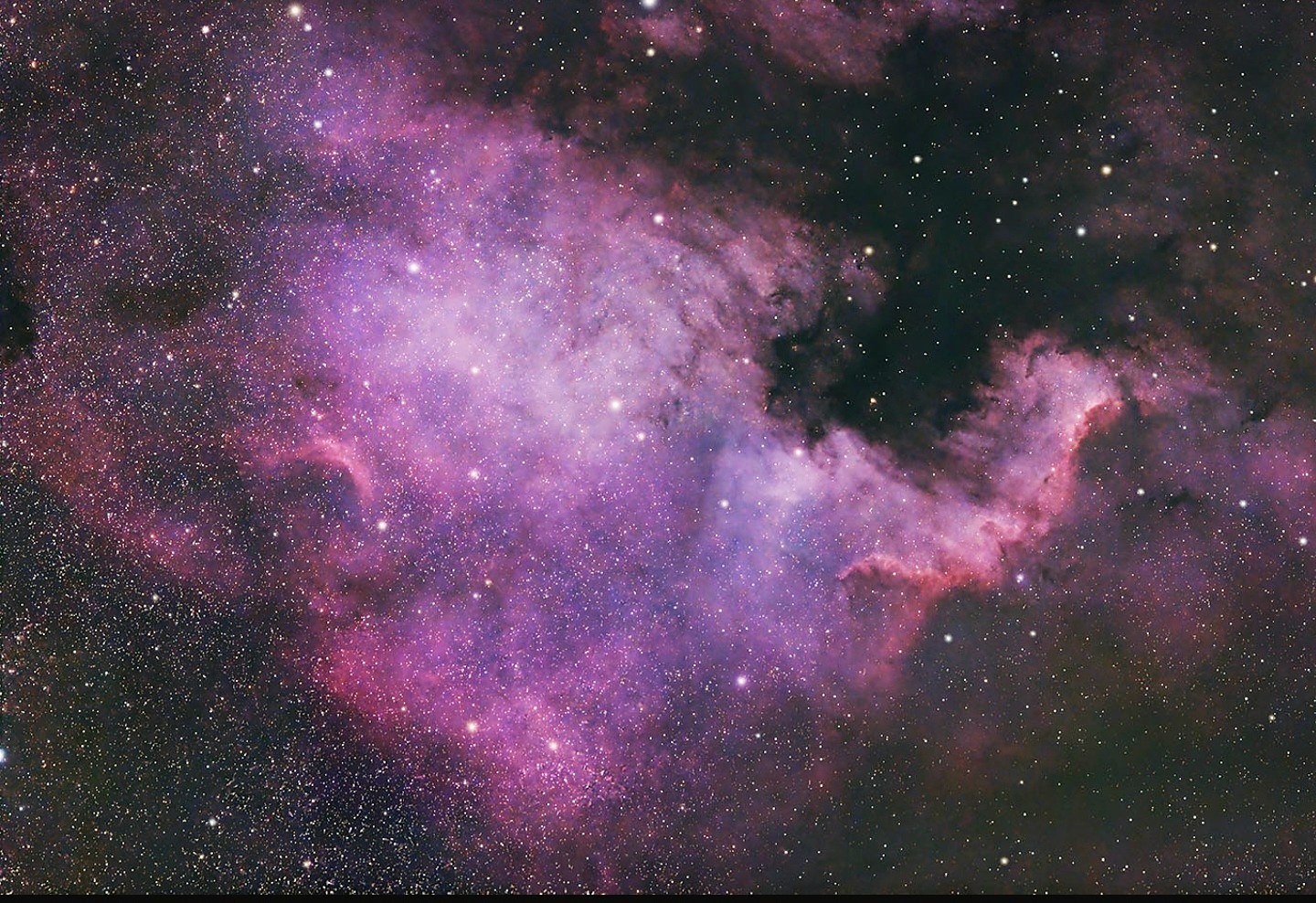
Image credits: Pleiades M45 — Antonio Ferretti & Attilio Bruzzone / Gruppo Astrofili Frentani (CC BY-SA 4.0); Orion Nebula M42 — Arunnvijaywiki (CC0); Horsehead + Flame Nebulae — Gianni.lacroce (CC0); Crab Nebula M1 — Shaihulud D. D. (CC BY-SA 4.0); Rosette Nebula — Chuck Ayoub / Cpayoub (CC BY-SA 4.0). Astronomical images are displayed cropped to fit the page layout.