Monthly Night Sky Guide
October Night Sky Guide 2026 Southern Europe
What to see and photograph this October from Spain and Southern Europe, including the best dark-sky nights, deep-sky targets and practical observing highlights.
Plan the monthOctober 2026
October at a Glance
The useful dates and seasonal shifts to know before planning an observing or imaging night.
Southern Spain · 37.7°N
October Sky Planner
Approximate timings from Southern Spain · 37.7°N · October 2026
Dusk – around 10pm
Early Evening
- Cygnus
- North America Nebula
- Veil Nebula
Around 10pm – midnight
Mid-Evening
- Heart Nebula — IC 1805
- Pacman Nebula — NGC 281
- Bubble Nebula + M52
After midnight
Late Night
- Pleiades — M45
- California Nebula — NGC 1499
- Orion Nebula — M42
Around the New Moon
Dark-Sky Window
6–14 October
Darkest around the New Moon on 10 October. Moon-free hours vary through the window.
Photographer’s tipUse the first half of the night for Cassiopeia targets, then move into Perseus and Taurus as they climb.
Featured targets
5 October Targets to See or Photograph
Five useful October targets spanning emission nebulae, a returning star cluster and different imaging scales, with detailed notes further down the guide.
01 · Emission Nebula
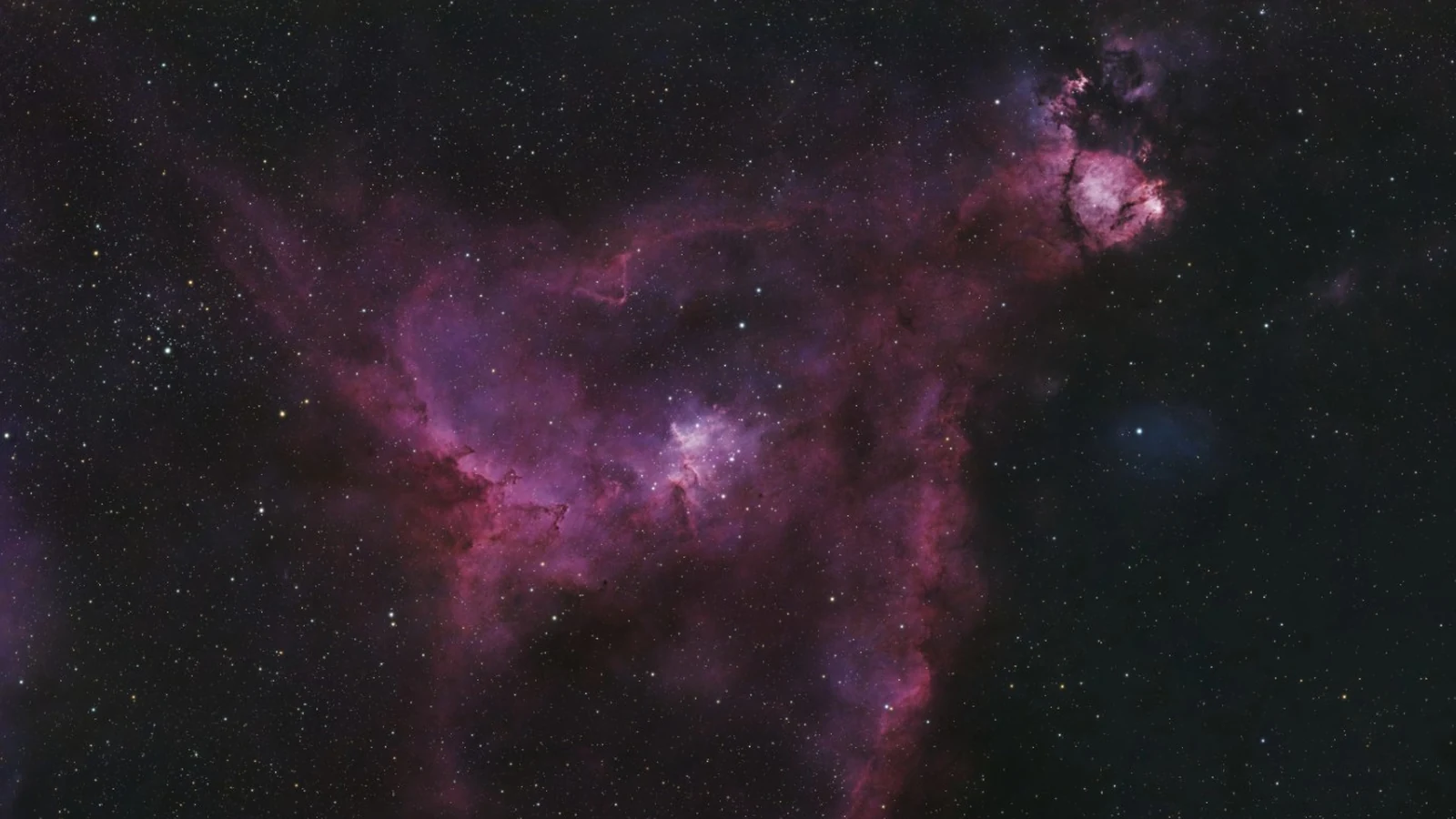
Heart Nebula — IC 1805
The Heart Nebula is a large hydrogen-rich emission region in Cassiopeia and an excellent October target from Southern Spain. It is already well placed during the evening and rewards both wide-field framing and narrowband work.
Best time: Mid-evening onward.
Detailed imaging notes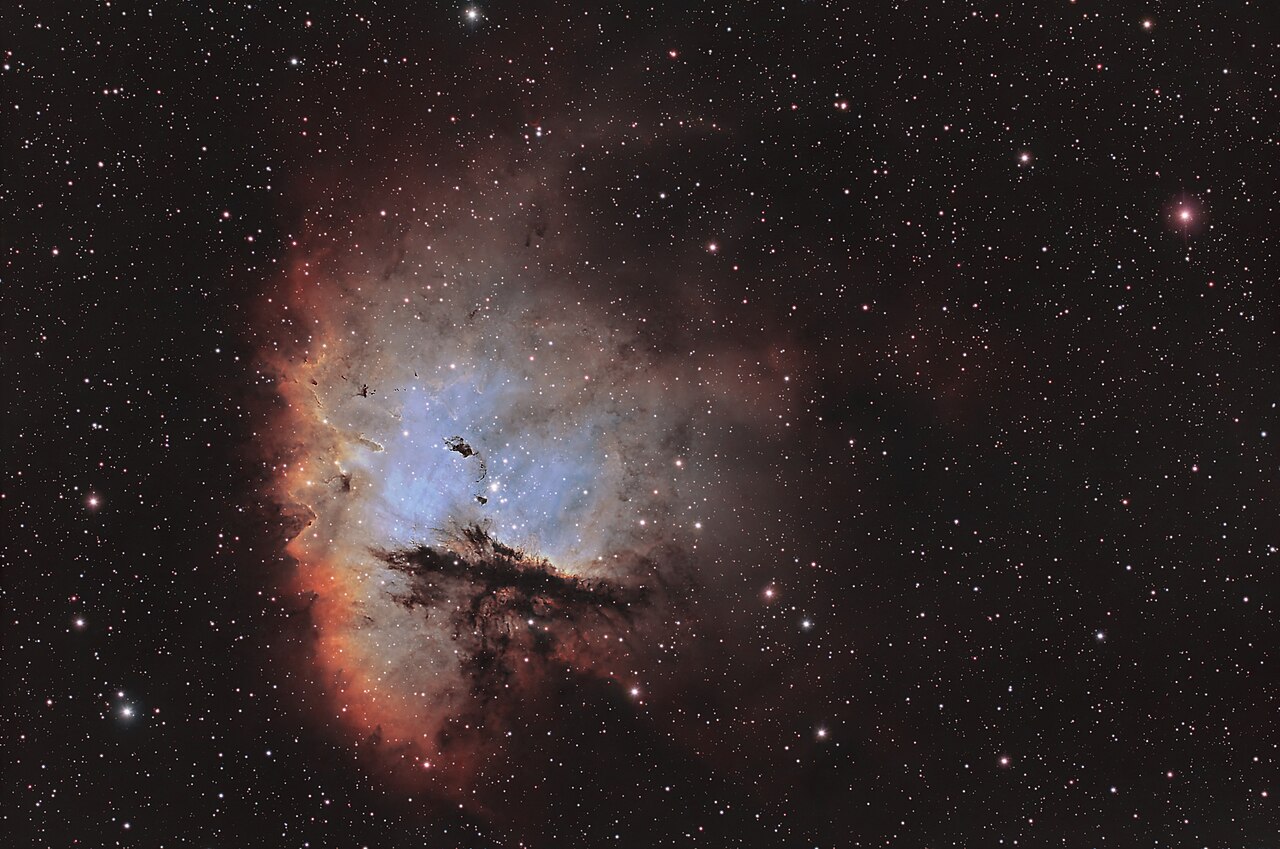
02 · Emission Nebula
Pacman Nebula — NGC 281
NGC 281 is a bright emission nebula in Cassiopeia with a distinctive dark lane that gives it the familiar Pacman shape. October places it well for long evening imaging runs from Southern Spain.
Best time: Mid-evening onward.
Detailed imaging notes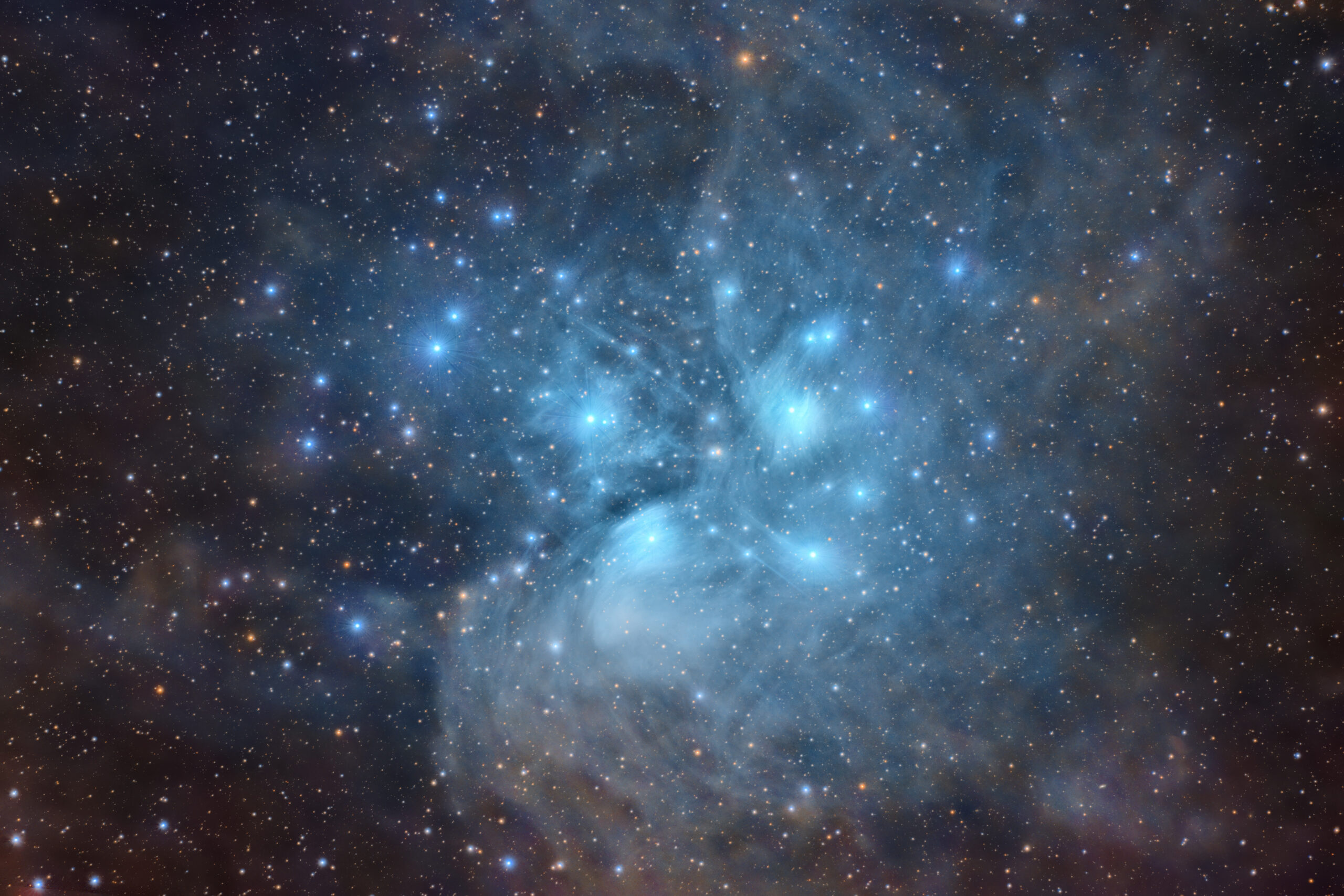
03 · Open Star Cluster
Pleiades — M45
The Pleiades return as a genuinely useful late-night October target. The bright blue stars are easy to capture, but dark skies and careful broadband processing are needed to reveal the surrounding reflection nebulosity.
Best time: Late evening into the early hours.
Detailed imaging notes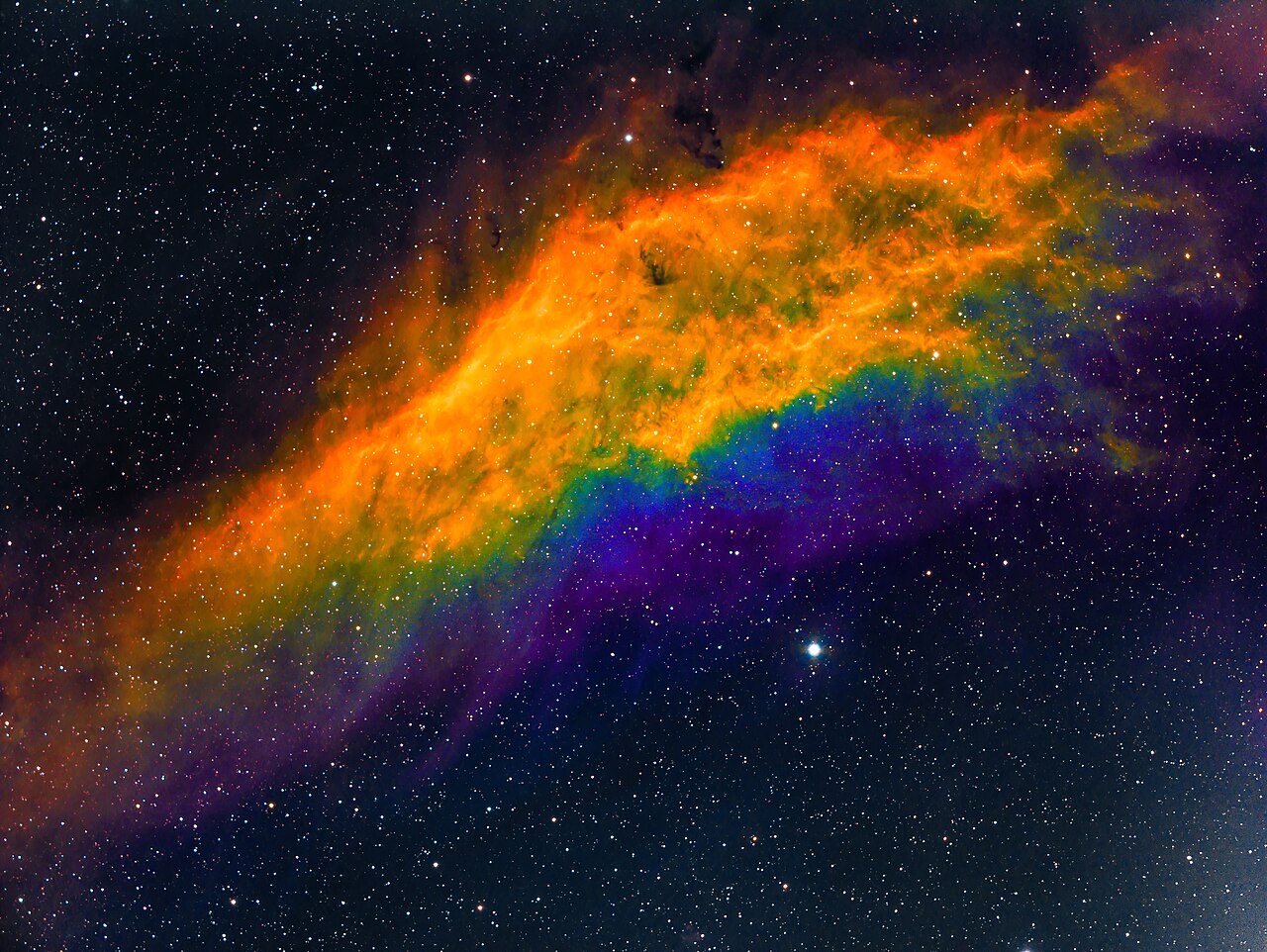
04 · Emission Nebula
California Nebula — NGC 1499
The California Nebula is a huge emission nebula in Perseus that becomes increasingly useful later in October nights. Its scale makes it ideal for short focal lengths and wide-field compositions.
Best time: Late evening into the early hours.
Detailed imaging notes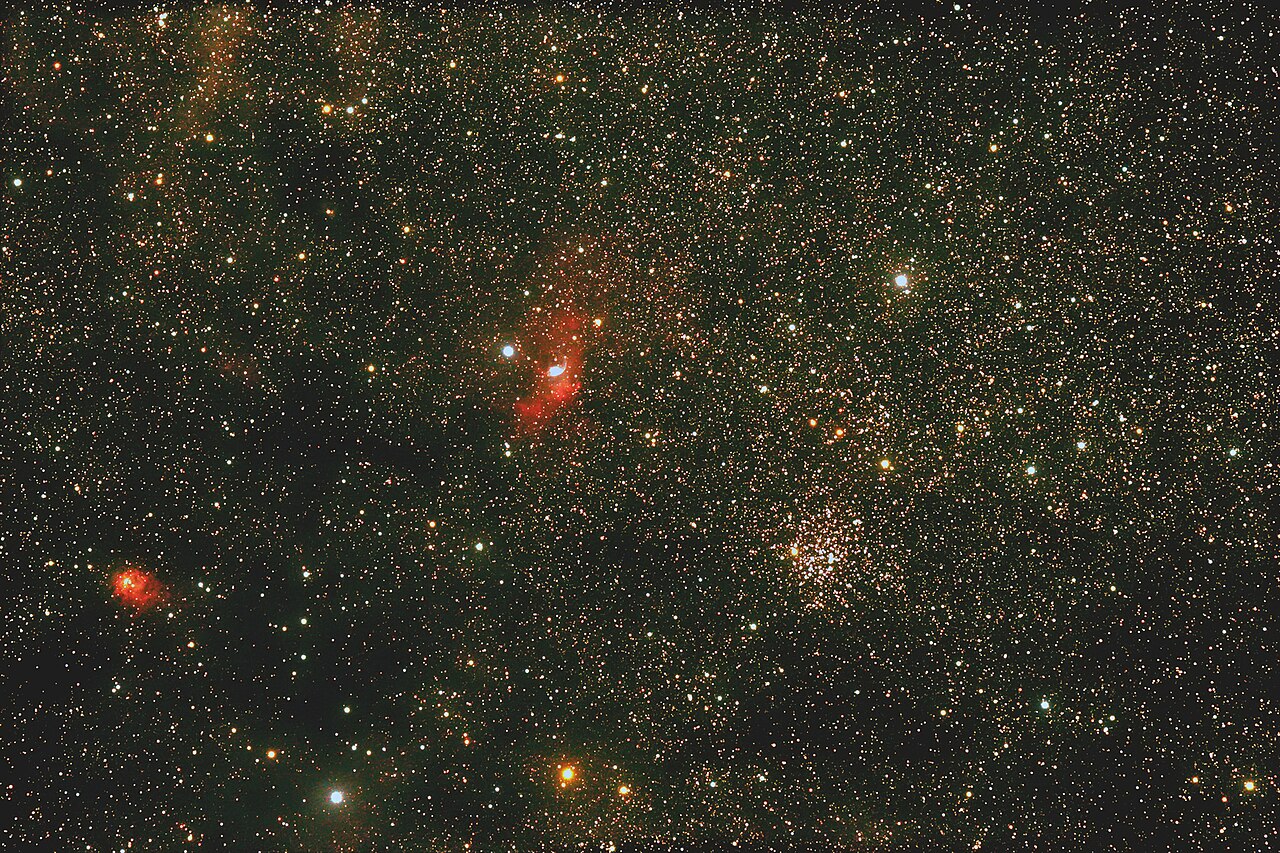
05 · Nebula + Open Cluster
Bubble Nebula + M52 — NGC 7635
The Bubble Nebula and nearby M52 make a compact, varied Cassiopeia field. October gives the region a strong evening position and the pairing offers a different scale from the very wide Heart and California Nebulae.
Best time: Evening onward.
Detailed imaging notesAcross the month
Other October Highlights
Saturn at Opposition
Saturn reaches opposition and is well placed for evening observing through much of the night.
Draconid Meteor Shower
The Draconids peak close to New Moon, giving favourable lunar conditions for evening meteor watching.
Mercury at Greatest Elongation
Mercury reaches greatest eastern elongation and is best sought low in the western sky after sunset.
Orionid Meteor Shower
The Orionids reach their peak, although a bright waxing gibbous Moon will obscure some of the fainter meteors in 2026.
Technical planning
Detailed October Imaging Guide
October shifts the emphasis toward Cassiopeia and Perseus from Southern Spain: rich emission nebulae are strong through the evening, while Taurus and the Pleiades become increasingly useful later at night. Andromeda, Triangulum and the Double Cluster remain excellent carry-over targets without needing to dominate a second consecutive monthly guide.
Focal-length suggestions are approximate and depend on sensor size and framing. Filter recommendations are practical starting points rather than fixed rules; Leonard’s Lookout’s dark skies also make broadband imaging particularly useful when the Moon is absent.
01 · Emission Nebula
Heart Nebula — IC 1805
Why October matters: Cassiopeia is strong through October evenings, giving IC 1805 a long practical imaging window without waiting until the early hours.
- Best time
- Mid-evening → overnight
- Focal length
- Approx. 135–400 mm
- Filters
- Hα/OIII or dual-band
- Difficulty
- Moderate
- Main challenge
- Large field and faint outer emission
The full Heart Nebula needs a generous field of view, so camera lenses and short refractors are particularly effective.
Narrowband and dual-band filters bring out the hydrogen-rich structure strongly, while dark moonless skies help retain the surrounding star field.
↑ Back to October targets02 · Emission Nebula
Pacman Nebula — NGC 281
Why October matters: Its Cassiopeia position gives the Pacman Nebula a long autumn observing and imaging window.
- Best time
- Mid-evening → overnight
- Focal length
- Approx. 300–800 mm
- Filters
- Hα/OIII/SII or dual-band
- Difficulty
- Moderate
- Main challenge
- Dust lanes and bright-star control
NGC 281 suits moderate focal lengths that reveal both its bright emission front and darker internal structure.
Narrowband data works especially well, while a colour camera with a dual-band filter can produce strong results efficiently.
↑ Back to October targets03 · Open Star Cluster
Pleiades — M45
Why October matters: Taurus rises progressively earlier through October, making M45 a natural second-half-of-the-night target.
- Best time
- Late evening → overnight
- Focal length
- Approx. 200–500 mm
- Filters
- Broadband / UV-IR cut
- Difficulty
- Moderate
- Main challenge
- Star halos and faint reflection dust
M45 is bright enough to frame and focus easily, but the blue reflection nebulosity is much subtler than the stars themselves.
Broadband data under a dark sky is the right approach for the characteristic blue dust; aggressive narrowband filtering works against this target.
↑ Back to October targets04 · Emission Nebula
California Nebula — NGC 1499
Why October matters: Perseus is well placed and NGC 1499 climbs into a stronger position as the night progresses.
- Best time
- Late evening → overnight
- Focal length
- Approx. 135–400 mm
- Filters
- Hα or dual-band
- Difficulty
- Easy–moderate
- Main challenge
- Very large framing
NGC 1499 stretches across several degrees, so wide-field optics make the most of its elongated shape.
Its hydrogen emission responds strongly to Hα or dual-band filtration, particularly around the New Moon window.
↑ Back to October targets05 · Nebula + Open Cluster
Bubble Nebula + M52 — NGC 7635
Why October matters: Cassiopeia remains high and accessible for much of the night, giving this field a long autumn imaging window.
- Best time
- Evening → overnight
- Focal length
- Approx. 400–1000 mm
- Filters
- Hα/OIII or dual-band
- Difficulty
- Moderate
- Main challenge
- Balancing small nebula detail with the wider star field
Longer focal lengths reveal the Bubble itself, while a somewhat wider field brings nearby M52 and surrounding nebulosity into the composition.
Dual-band or narrowband filtration helps separate the emission structure from the dense Cassiopeia star field.
↑ Back to October targetsBeyond the five
Other October Targets Worth Considering
The five targets above are not the whole October sky. Depending on equipment, focal length and the time of night, these are also worth adding to an observing or imaging list.
Still one of the strongest autumn broadband targets and now well placed for long evening imaging runs.
A rewarding low-surface-brightness galaxy for dark, transparent nights around the October New Moon.
Bright, easy and increasingly prominent through the evening in Perseus.
Orion returns to the late-night sky during October, making M42 increasingly accessible after midnight.
Leonard’s Lookout · Granada
From Dark-Sky Southern Spain
October brings properly autumnal observing nights to southern Spain. Around Leonard’s Lookout in the Granada Geopark, Bortle 3 skies, open horizons and dry rural surroundings make the month particularly useful for Cassiopeia and Perseus nebulae through the evening, with Taurus and the first winter targets arriving later at night.
The darkest part of October falls around the New Moon on 10 October. The Draconid peak on 8–9 October also lands close to New Moon, giving favourable lunar conditions. Exact conditions will always depend on weather, transparency, the Moon’s position and the time of night.
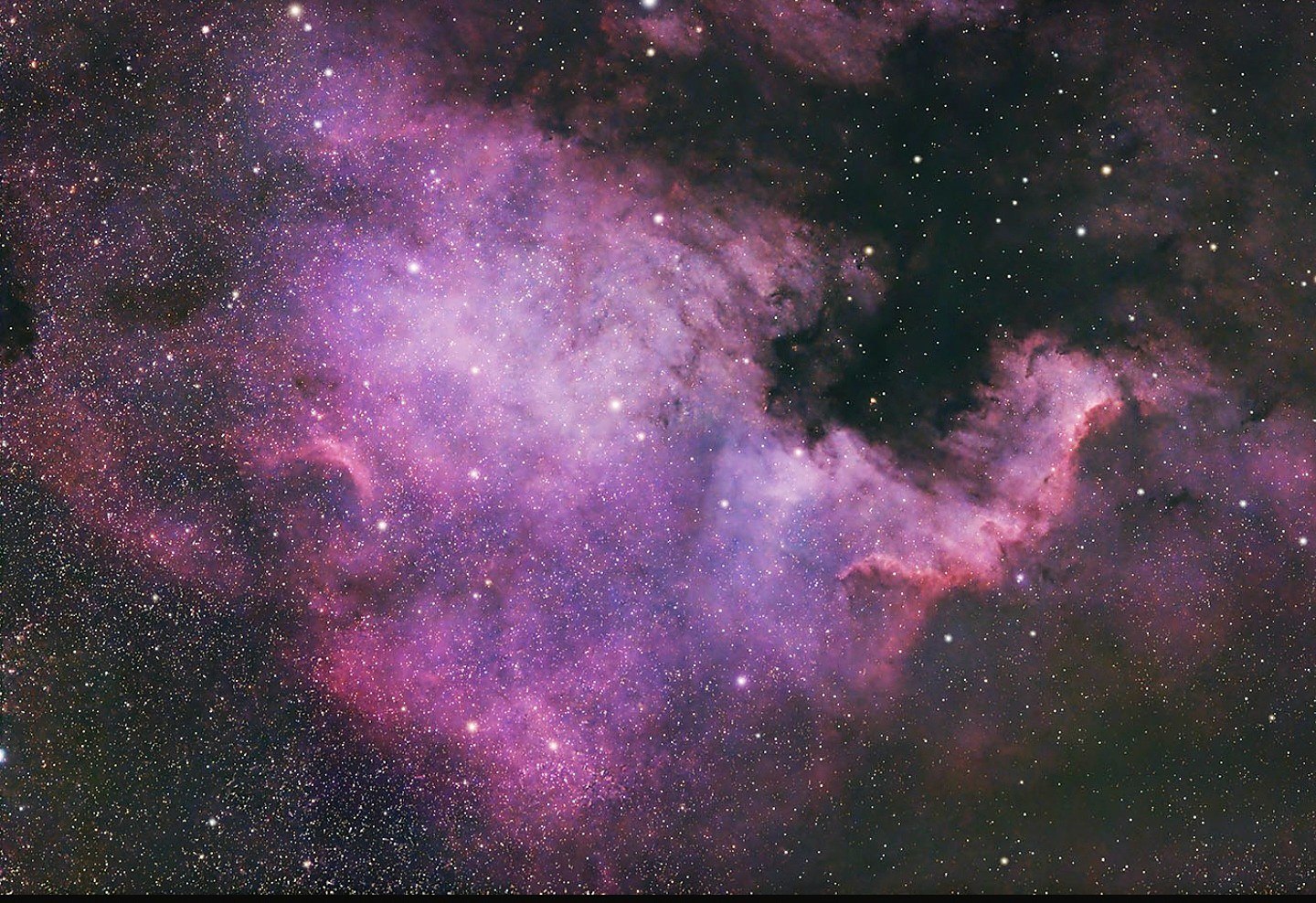
Image credits: Heart Nebula — Leonard’s Lookout; Pleiades M45 — Antonio Ferretti & Attilio Bruzzone / Gruppo Astrofili Frentani (CC BY-SA 4.0); Pacman Nebula NGC 281 — Carpe Noctem (CC BY-SA 4.0); California Nebula NGC 1499 — Ram samudrala (CC BY 4.0); Bubble Nebula + M52 — Miodrag Sekulic (CC BY-SA 3.0). Astronomical images are displayed cropped to fit the page layout.