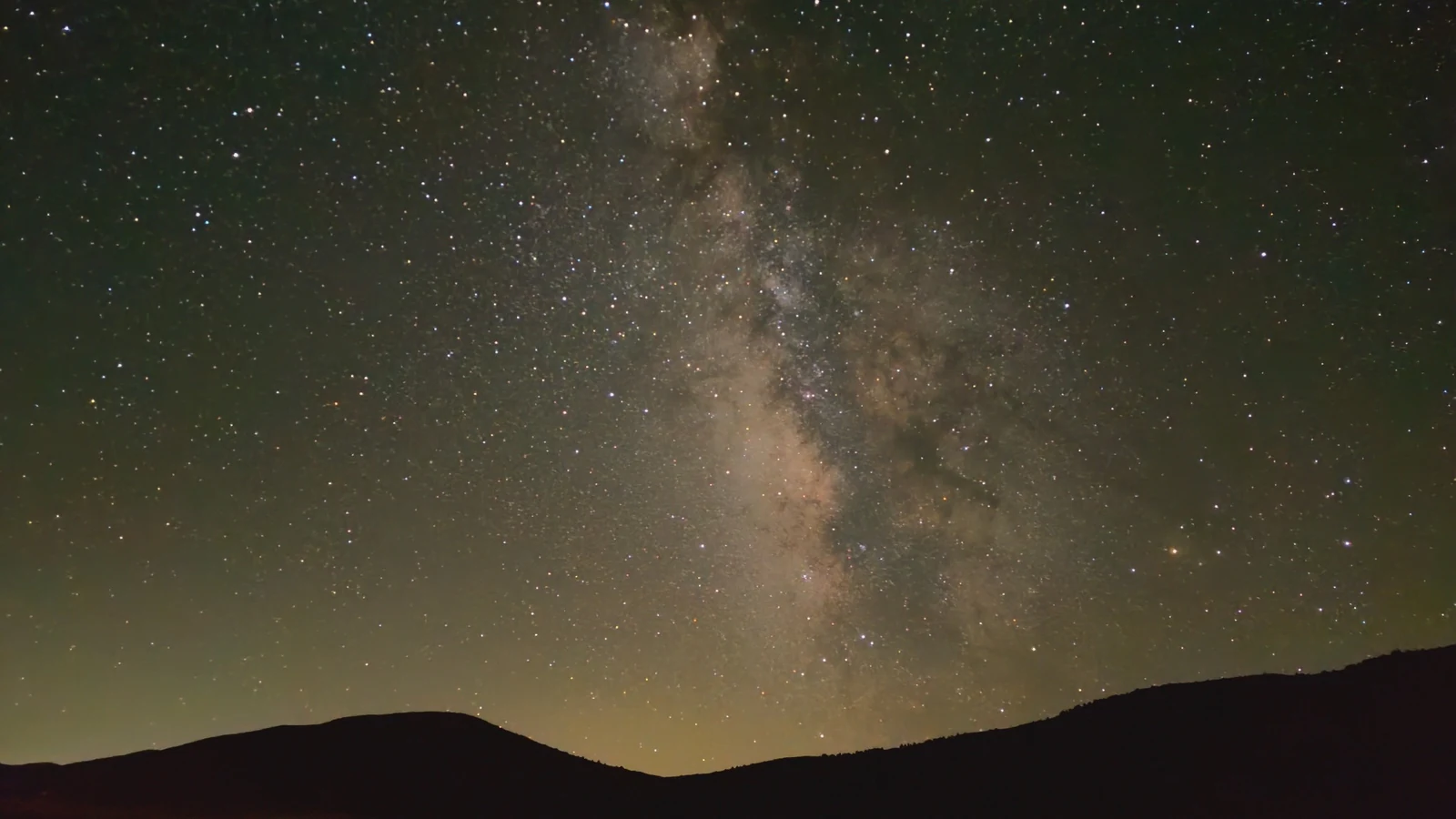
Photographed at Leonard’s Lookout using a Samsung Galaxy S23. No telescope, tracking mount or dedicated astronomy camera was used.
Updated June 2026
Astrophotography in southern Spain is often promoted using simple phrases such as clear skies and low light pollution. For astrophotographers, those claims are not enough. A cloudless night can still have poor transparency, a dark sky can still produce soft stars when the atmosphere is unstable, and a technically clear forecast can be compromised by wind, dust or a low target.
Leonard’s Lookout is located in rural Granada province at approximately 37.7° north, with outdoor setup areas and power available at both the front and back of the property. The location provides access to low southern summer targets as well as constellations that climb much higher during the night, but no observing site can guarantee perfect conditions on every visit.
This guide looks at what actually matters when planning an imaging session here: darkness, transparency, seeing, target altitude, cloud, wind, humidity, temperature, moonlight and seasonal change. The aim is to give astrophotographers realistic expectations rather than describe every clear night as exceptional.
What makes a good night for astrophotography in southern Spain?
A useful imaging night depends on several conditions aligning at the same time. Darkness matters, but it is only one part of the picture. Transparency determines how much light reaches the camera, seeing affects the sharpness of fine detail, and wind, humidity, cloud and target altitude can decide whether a sequence remains usable.
The importance of each factor also depends on the target. A wide-field emission nebula can tolerate conditions that would frustrate high-resolution planetary-nebula imaging. Narrowband data may remain productive with some moonlight, while broadband dust and reflection nebulosity need a cleaner, darker background.
Before committing to a target, consider:
- sky darkness and Moon position;
- transparency and airborne dust;
- atmospheric seeing;
- target altitude and direction;
- cloud cover and thin cirrus;
- wind speed and gusts;
- humidity, dew point and temperature change.
A clear forecast is therefore a starting point rather than a guarantee of excellent data.
How dark are the skies around Leonard’s Lookout?
Leonard’s Lookout sits beneath Bortle 3 skies in a sparsely populated part of rural Granada province. On a clear, moonless night, the background sky is substantially darker than that experienced from towns, suburbs and most heavily populated parts of Europe.
That creates a strong base for broadband imaging, faint nebulae, wide-field Milky Way work and long integrations. It does not mean that every part of the sky is identical. The Moon, atmospheric haze, thin cloud and distant light domes can still brighten particular directions or reduce contrast.
The Bortle rating should be treated as a broad description of the surrounding light environment rather than a promise of fixed image quality. Actual data still depend on the night, the target’s position and the atmosphere through which it is being photographed.
The most demanding broadband projects should be planned around moonless periods. Emission targets photographed through narrowband or dual-band filters provide more flexibility when some moonlight is present.
Transparency: when a clear sky is not a clean sky
Transparency describes how cleanly light passes through the atmosphere. A sky may appear cloudless while still containing dust, moisture, aerosols or very thin cirrus that weaken faint signal and increase background gradients.
This matters particularly for objects low in the south. Their light travels through more atmosphere than light arriving from close to the zenith, so any dust or haze has a greater effect. Sagittarius targets can therefore suffer from reduced contrast even when higher Cygnus targets remain productive.
At approximately 950 metres above sea level, Leonard’s Lookout has useful elevation, but it is not an observatory summit and should not be described as one. Atmospheric conditions can still vary substantially from night to night.
Saharan dust is an occasional factor across southeastern Spain. It may be obvious as a milky or discoloured sky, but lighter concentrations can be less noticeable visually while still affecting imaging. Cloud forecasts should therefore be checked alongside aerosol, dust and humidity information.
On nights of weak transparency, bright emission targets may remain worthwhile, particularly through narrowband filters. Faint broadband dust, reflection nebulae and low-contrast structures are better reserved for cleaner conditions.
Seeing: why sharpness changes from night to night
Seeing describes the blurring caused by turbulence in the atmosphere. It is different from transparency: the sky can be exceptionally clear but unstable, or slightly hazy while remaining relatively steady.
Poor seeing causes stars to appear larger and reduces fine detail. Its effect is most obvious with longer focal lengths, small planetary nebulae, compact galaxies and other high-resolution targets. Wide-field systems are generally less sensitive because their image scale does not record the atmospheric movement as clearly.
Seeing can change during the night as the ground cools, air masses move and wind conditions alter. A target photographed while low above the horizon will also usually suffer more atmospheric disturbance than the same target photographed near culmination.
No realistic accommodation can guarantee a particular seeing value. The practical approach is to match the target to the conditions: use steady nights for small, detailed objects and direct less stable nights towards wider fields or larger emission regions.
Southern horizons and target altitude
At a latitude of approximately 37.7° north, Leonard’s Lookout provides access to many southern summer targets, but objects in Sagittarius and southern Scorpius remain comparatively low. Targets near declination −25° culminate at roughly 27° above the southern horizon, while objects in Cygnus and Lyra can pass close to overhead.
That difference has a direct effect on image quality. Low targets are photographed through a thicker layer of atmosphere and are more vulnerable to extinction, dust, haze, turbulence and local obstructions. A target may be technically visible for several hours while only offering a much shorter period of genuinely useful imaging.
Southern objects should normally be prioritised close to culmination. Framing, focus, guiding and plate solving should be completed before the strongest window begins rather than using the target’s highest altitude for setup.
Higher targets offer more flexibility. Cygnus, Lyra, Hercules and Vulpecula remain productive for longer and are generally less affected by atmospheric extinction. They also provide practical alternatives when conditions close to the southern horizon are weaker than expected.
Power is available at both the front and back of Leonard’s Lookout, allowing guests to choose a setup position according to the target, equipment and available view. The exact horizon should still be checked before committing a full sequence.
How astrophotography conditions change through the year
There is no single best season for every form of astrophotography. Summer offers rich Milky Way fields and prominent emission nebulae but relatively short nights. Winter provides much longer darkness and different deep-sky targets, while spring and autumn act as transitional periods with their own advantages and weather risks.
The Granada Altiplano has a dry, continental-influenced climate with strong seasonal temperature differences, very dry summers and irregular rainfall during the rest of the year. These regional patterns help with broad planning, but individual nights still need to be assessed from current forecasts.
Summer
Summer brings the shortest periods of astronomical darkness but some of the richest target fields of the year. Sagittarius and Serpens are available in the south, while Cygnus rises into a much stronger position later in the night. Milky Way and nightscape imaging also become central seasonal opportunities.
Rain is generally least likely during the region’s pronounced summer dry period, but clear does not always mean transparent. Heat retained by the ground, atmospheric instability, wildfire smoke or Saharan dust can still affect data.
Daytime temperatures can be high, while the property’s elevation allows temperatures to fall after sunset. Equipment should be allowed to acclimatise, and focus should be monitored as the night cools.
Autumn
Autumn brings progressively longer nights while many summer targets remain available during the early evening. Later in the season, Andromeda, Cassiopeia, Perseus, Auriga and Taurus become increasingly important.
Temperatures are generally easier to manage than during the height of summer, but weather becomes less predictable. Cloud, rain and stronger frontal systems become more plausible, so a multi-night stay provides useful protection against losing a single planned session.
Autumn can produce excellent transparent nights after weather systems have cleared the atmosphere. It can also bring rapid temperature changes, so dew control, refocusing and equipment protection should remain part of the plan.
Winter
Winter offers the longest imaging windows and gives Orion, Monoceros, Taurus, Auriga and other northern winter fields time to climb into strong positions. Long nights also make it easier to build meaningful integration without extending a project across as many sessions.
The trade-off is colder and less predictable weather. At approximately 950 metres above sea level, Leonard’s Lookout can experience low overnight temperatures, frost and occasional winter precipitation. Equipment, cables, batteries and dew-control systems should be prepared accordingly.
Winter should not be presented as permanently clear or mild simply because the property is in southern Spain. When conditions cooperate, the long darkness is extremely useful; when they do not, several consecutive nights provide a better chance of securing data than a single-night visit.
Spring
Spring is a transitional period. Winter constellations remain accessible during the earlier evening while galaxy-rich regions in Leo, Virgo, Coma Berenices and Ursa Major become increasingly prominent.
Conditions can change quickly. Wind, passing cloud, rainfall and airborne dust may all become factors, while the length of full darkness steadily decreases towards summer.
For long-focal-length galaxy imaging, atmospheric steadiness matters more than a simple clear forecast. Wider-field projects provide a useful alternative when transparency is acceptable but seeing is not strong enough for fine detail.
Deep-sky, Milky Way and solar imaging need different conditions
Different forms of astrophotography respond to conditions in different ways, so a night that is poor for one project may still be useful for another.
Deep-sky imaging benefits from darkness, transparency and stable tracking conditions. Faint broadband targets are the least forgiving because moonlight, dust and gradients quickly reduce contrast. Bright emission nebulae can remain productive under less-than-perfect conditions, particularly with suitable narrowband or dual-band filters.
Milky Way and nightscape photography depend heavily on transparency and a clear view towards the Galactic Core. Thin haze that barely affects a bright nebula through a telescope can flatten contrast across a wide-field image and make distant light domes more obvious.
Solar imaging is different again. Darkness is irrelevant, while atmospheric steadiness, wind and solar altitude become the main concerns. Early morning can sometimes provide steadier air than the heat of midday, although the best window varies with season and local conditions.
The practical result is that guests do not need to rely on one type of target. Deep-sky objects, Milky Way compositions and solar imaging provide different options across the day and night.
Moonlight, dust, wind, dew and temperature
Moonlight is one of the most predictable influences on the sky. Broadband projects involving faint dust, reflection nebulosity or natural-colour star fields are best planned close to New Moon. Bright emission targets are more flexible, although the Moon’s position relative to the target still matters.
Dust can be less predictable. Saharan air may reduce transparency even when the sky appears technically clear. Wide-field images, low southern targets and faint broadband data tend to show the effect first.
Wind affects both image quality and equipment safety. Even moderate gusts can disturb long focal lengths, large dew shields and lightweight tripods. A sheltered position may help, but it should not compromise the required horizon or create turbulent airflow around buildings.
Humidity and dew are generally less persistent than at many northern European sites, but they should not be ignored. Temperature can fall noticeably after sunset, and exposed optics may still reach the dew point. Dew straps, lens heaters and suitable covers remain sensible equipment.
Temperature changes also affect focus, cable flexibility, battery performance and mechanical spacing. Automated refocusing is useful, but manual imagers should check focus regularly rather than assuming the initial setting will remain stable all night.
What astrophotographers should realistically expect
Leonard’s Lookout offers a dark rural setting, useful elevation and practical facilities for astrophotography. It does not offer guaranteed cloudless nights, observatory-grade seeing or complete immunity from dust, wind and moonlight.
On a strong night, guests can expect dark skies, good access to summer southern targets and high-altitude northern targets, with enough space and power to run a full imaging setup from the property. On a weaker night, target choice and flexibility become more important.
Realistic expectations include:
- some nights being better for transparency than seeing;
- low southern targets having shorter useful windows;
- seasonal dust or haze occasionally affecting contrast;
- winter nights being longer but less predictable;
- summer nights being shorter but often easier to plan around;
- conditions changing noticeably during a multi-night stay.
The advantage of a dedicated astrophotography stay is not that every night will be perfect. It is that equipment can remain assembled, targets can be adapted to the conditions, and useful integration can be built across several sessions.
Planning an imaging stay at Leonard’s Lookout
For astrophotography in southern Spain, the strongest approach is to plan several possible targets rather than arrive with one fixed sequence. Include a low southern target, a high northern alternative and at least one project that remains useful under moonlight or weaker transparency.
Guests bring their own cameras, mounts, telescopes and solar equipment. Power is available at both the front and back of the property, and Starlink Wi-Fi is available throughout the house and outside. A fully equipped office provides space for planning, image processing and remote work between sessions.
Before travelling, check:
- Moon phase and Moon position;
- target altitude and culmination time;
- likely cloud, wind and humidity;
- dust or aerosol forecasts;
- equipment power requirements;
- backup targets for weaker conditions.
A multi-night stay gives the best chance of matching each target to the conditions rather than forcing every project into a single evening.
More information about the setup areas, facilities and accommodation is available on the Leonard’s Lookout astrophotography page.